Skip to content
Lithium-ion battery module with welded nickel strips on a lab bench

Battery Pack

Engineered from the cell up: chemistry, validation, management and architecture.

From cell to module to pack.

A pack is only as good as its weakest cell. We control every step, from choosing the chemistry to sealing the enclosure.

  1. Step 1: Cell

  2. Step 2: Module

  3. Step 3: Pack

Cylindrical, prismatic and pouch lithium-ion cells side by side

Sourcing the right cells

Chemistry and format are chosen for the application, balancing energy, power, cycle life, safety and cost.

Cell chemistries
ChemistryStrengthsWhere we use it
LFP (lithium iron phosphate)Thermally stable, long cycle life, cobalt-freeThree-wheelers, fishing boats, ferries, fleet vehicles
NMC (nickel manganese cobalt)High energy density, compact and lightPassenger cars, hypercars, long-range builds
LTO (lithium titanate)Very long life, ultra-fast charging, wide temperature rangeHigh-cycle and fast-swap duty
Sodium-ionLow cost, abundant materials, good cold performanceEmerging cost-driven low-voltage builds
Cell formats
FormatWhy it's chosen
Cylindrical 18650Mature, consistent and cost-effective
Cylindrical 21700More energy per cell and fewer connections
Cylindrical 4680High capacity with structural pack potential
PrismaticHigh volumetric efficiency and robust packaging
PouchLight, flexible and energy-dense
Cylindrical cells in a testing and grading fixture

Validating every cell

Before a cell enters a pack, it is measured, graded and matched. Matched cells mean balanced packs, longer life and predictable performance.

  • Internal resistance (IR)

    Lower, uniform IR means less heat and even ageing.

  • Capacity grading

    Cells are binned by measured capacity, not label capacity.
  • Voltage difference

    Tight cell-to-cell voltage spread before assembly.
  • Energy density

    Wh/kg and Wh/L checked against the application target.
  • Power density

    W/kg verified for acceleration and regeneration peaks.
  • Cycle life

    Sample cells cycled to confirm life before volume use.

Safety designed in

Safety is part of the architecture, not an add-on. Cell spacing, thermal barriers, venting paths, fusing and mechanical protection are designed together, and packs are validated against international standards.

IEC 62619
Safety of industrial lithium batteries, including marine use
IEC 62660
Lithium-ion cells for electric road vehicles
IEC 62133-2
Safety of sealed lithium cells
UN 38.3
Transport testing (tests T1 to T8)
UN ECE R100
Rechargeable energy storage safety for road vehicles
Battery management system board with copper busbars on a heat sink

Battery management systems.

The BMS is the brain of the pack. It measures every cell, balances charge, protects against faults and reports health. We design the architecture to suit the pack's voltage and current.

Protection: over-voltage, under-voltage, over-current, over-temperature, short-circuit and isolation monitoring.

  • MOSFET-based BMS

    Compact solid-state switching for low-voltage, moderate-current packs.
  • Contactor-based BMS

    High-current, high-voltage isolation with pre-charge control for large packs.
  • Active balancing

    Moves energy from stronger cells to weaker ones to maximise usable capacity.
  • Passive balancing

    Bleeds excess charge from high cells. Simple, reliable and cost-effective for well-matched packs.
  • Smart BMS

    CAN, IoT and Bluetooth connectivity for live state of charge, state of health, fault logs and remote diagnostics.
HILMIL lithium-ion battery pack installed in a boat hull

Pack range.

Every pack is designed and built in-house.

Battery module of cylindrical cells joined by a busbar

Fixed pack, 48V to 800V

From e-bikes to high-voltage cars, boats and vessels.
Swappable battery pack with carry handle and connector

Swappable pack, 48V to 72V

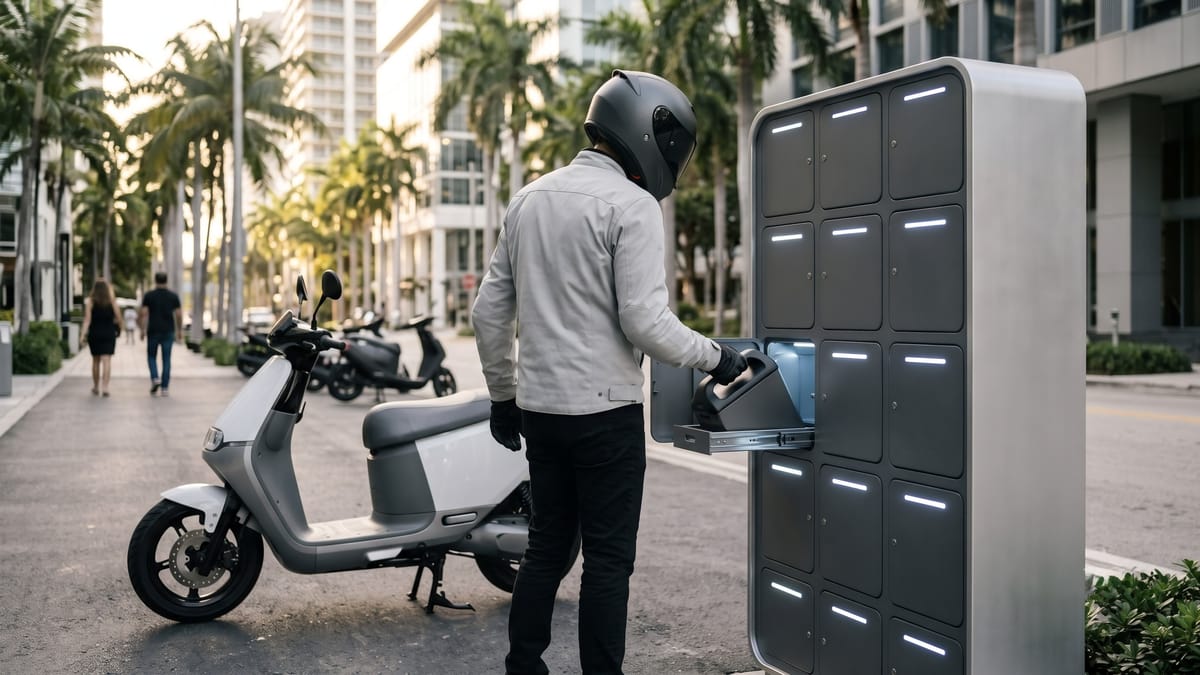
For two-wheeler, three-wheeler and small-boat fleets that can't stop to charge.
Rider exchanging a battery pack at a swap station

A pack for every platform.